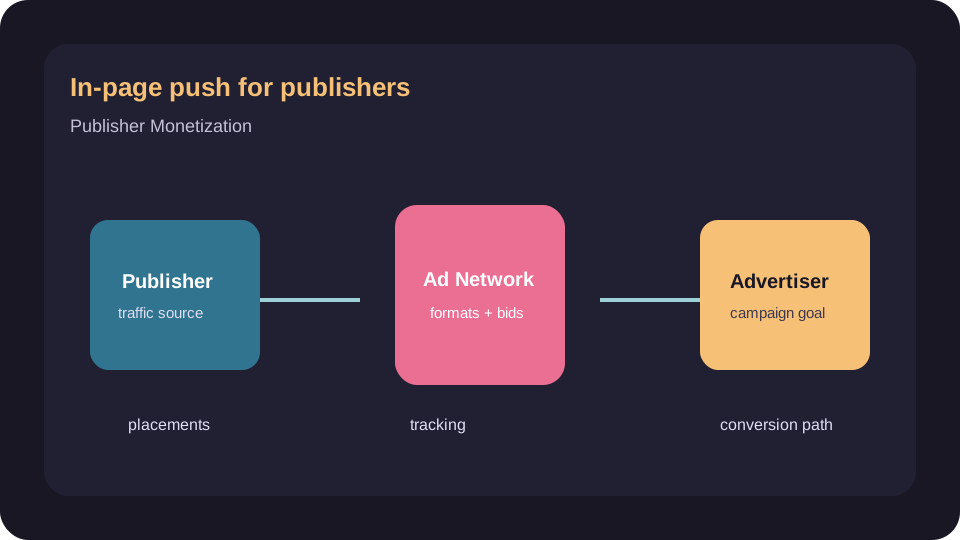
Why publishers use in-page push
In-page push lets a publisher earn from every visitor, not only from those who subscribed to notifications. Because the unit shows inside the page, it monetises the current session immediately and works across devices, including iOS where classic push cannot reach. For sites with broad, one-time traffic, that immediacy often earns more than waiting to build a notification list.
Placement and density
The unit performs best where it is visible without covering content the reader came for. A single, well-placed in-page push earns steadily; stacking several or dropping one over the main content lifts short-term revenue while raising bounce. As with every interruptive format, a tested, moderate density beats an aggressive one over the life of the site.
| Approach | Outcome |
|---|---|
| One visible, out-of-the-way unit | Steady revenue, low UX cost |
| Multiple stacked units | Higher short-term, more bounce |
| Over main content | Revenue spike, trust damage |
In-page push next to classic push
Many publishers run in-page push to monetise non-subscribers while also building a classic push list for recurring revenue. The two are complementary: in-page push earns now from everyone, classic push earns later from subscribers. Running both, with sensible frequency, spreads revenue across the whole audience.
Measuring the trade honestly
Track revenue per session together with engagement and returning-visitor rates. In-page push that boosts revenue but reduces return visits is a poor deal for a site that depends on loyalty. Review the creatives being served, and keep the format if it earns without eroding the audience.
Ready to compare options?
Open the tracked provider page after matching the offer to in-page push for publishers requirements.