What OctoClick is
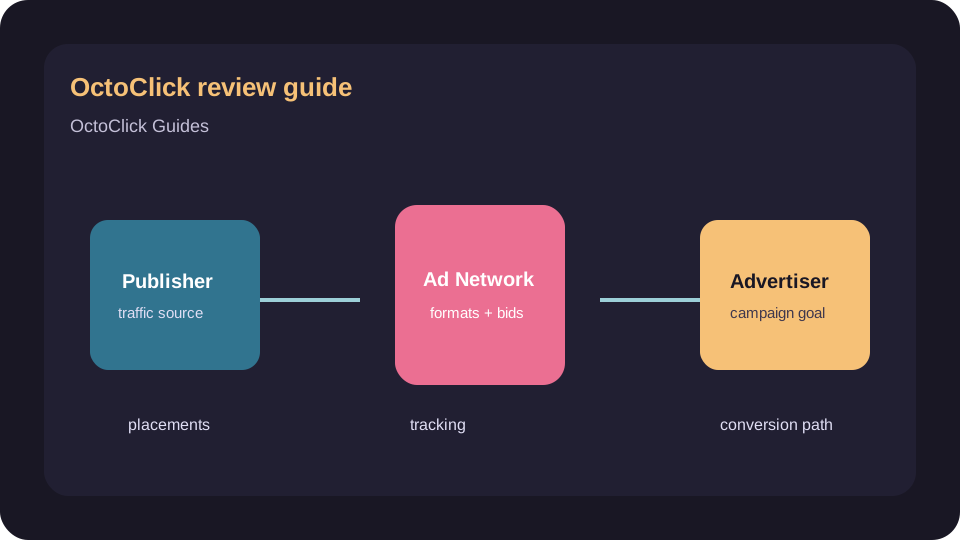
OctoClick is a self-serve advertising network built around high-volume, non-mainstream formats: popunder, push, in-page push and native placements. It sits between advertisers who want to buy traffic on a cost-per-click or cost-per-mille basis and publishers who want to monetise inventory that mainstream display networks often reject. This review looks at what the platform does well, where it needs care, and how to test it without overcommitting.
Formats and where they fit
Popunder traffic is the highest-volume, lowest-intent option and suits offers that can convert on a landing page after a single interruption. Push and in-page push reach users through notification-style creatives and reward a strong hook and clear call to action. Native blends into content and generally produces more considered clicks. The practical point for a review is that OctoClick is a good fit when your offer works with interruptive or discovery traffic, and a poor fit when you need search-style buyer intent.
| What to check | Strong point | Watch-out |
|---|---|---|
| Volume | Large popunder and push supply across many GEOs | Volume is not intent; test small first |
| Targeting | GEO, device, OS, browser and frequency controls | Broad targeting can waste budget without caps |
| Reporting | Real-time spend and conversion tracking with postbacks | You must set up tracking before scaling |
| Cost model | CPC and CPM options depending on format | Model choice changes how you should optimise |
Advertiser experience
For media buyers the useful workflow is to launch one format with tight GEO and device targeting, a small daily cap and a tracked landing page. Because pop and push inventory is cheap per unit, the risk is spending steadily on traffic that never converts. Frequency caps, source-level reporting and a clear stop rule are what turn cheap traffic into a measurable channel.
Publisher experience
For site owners the attraction is filling inventory that AdSense-style programmes will not, and earning on formats that do not depend on premium display demand. The trade-off is user experience: popunders and aggressive push prompts can annoy loyal readers, so placement discipline and a tested frequency matter more than raw fill rate.
How to run a fair first test
Set a fixed test budget you are willing to lose, pick one format and one or two GEOs, and define in advance what result would justify scaling. Keep everything else constant so the data is readable. A review is only useful once your own numbers, not a headline claim, decide whether to continue.
OctoClick pros and cons
| Pros | Cons |
|---|---|
| Self-serve: you can launch without a sales call | Popunder and push traffic is low intent by nature |
| Several formats in one account: popunder, push, in-page push, native | Needs disciplined targeting and caps or budget leaks |
| GEO, device, OS and browser targeting | Results vary heavily by GEO and offer type |
| Useful for publishers rejected by mainstream display networks | Aggressive formats can annoy loyal readers |
Who OctoClick suits — and who it does not
Good fit
- Media buyers testing offers that convert from a landing page: apps, utilities, sweepstakes, some e-commerce.
- Affiliates who already use a tracker and understand CPA, eCPM and zone optimisation.
- Publishers with traffic that AdSense-style programmes reject or underpay.
Poor fit
- Brands that need search-level buyer intent or strict brand-safety guarantees.
- Beginners without tracking who plan to “see what happens” with a large budget.
- Publishers whose audience is small, loyal and sensitive to pop-ups.
Setting up a first OctoClick campaign
- Create an account and add funds you are prepared to spend on learning.
- Pick one format — usually popunder or in-page push — and one or two GEOs.
- Add your tracker's postback so conversions appear next to spend.
- Set a daily cap and a frequency cap, then launch at a moderate bid.
- Review zone-level results daily; block zones that spend without converting.
For format choice see OctoClick ad formats; for pricing, the CPM and CPC guide.
Our verdict
OctoClick is a practical self-serve option for buyers and publishers who work with popunder, push and native traffic and who measure everything. It is not a shortcut: the platform gives you inventory and controls, while profit comes from your offer, landing page and optimisation. If that matches how you work, a small, tracked test is the right next step; if you need high-intent search traffic, look elsewhere — compare in OctoClick alternatives.
Ready to compare options?
Open the tracked provider page after matching the offer to OctoClick review requirements.