Ad Network Basics
9 lessons for ad network basics.
Open pathIndependent ad network education
Learn ad networks, publisher monetization, native ads, in-page push, popunder, CPM, CPC and traffic buying through practical courses.
9 lessons for ad network basics.
Open path10 lessons for publisher monetization.
Open path10 lessons for traffic buying.
Open path6 lessons for octoclick guides.
Open path6 lessons for ad network comparisons.
Open pathCourse system
Ad networks sit between two different groups. Publishers want to monetize traffic without damaging their site experience. Advertisers want to buy traffic without losing control of budget, targeting or measurement. OctoClick Courses is built around both sides because a useful ad network education site should explain the marketplace rather than only pushing a signup link.
The site is intentionally educational. It does not promise instant profit, guaranteed conversion rates or fixed publisher earnings. Instead, it teaches the practical pieces: ad formats, pricing models, traffic quality, tracking, budget control, payment expectations, landing page readiness and responsible optimization.
Learn how publishers, advertisers, formats, bids, reporting and traffic quality fit together before joining a network.
Plan native, in-page push and popunder tests without sacrificing user experience or payment clarity.
Set tracking, test budgets, creatives, targeting and stop rules before buying paid traffic.
Evaluate OctoClick by formats, publisher fit, advertiser fit, CPM/CPC context and reporting needs.
Compare native, push, popunder, ad networks, affiliate networks and traffic arbitrage models with neutral criteria.
Use diagrams and checklists to make ad formats, campaign flow and publisher revenue decisions easier to understand.
A publisher searching for monetization advice has different questions from an advertiser buying traffic. The publisher asks whether a format fits their layout, how payments work, what traffic rules apply and how placements affect visitors. The advertiser asks whether the format can reach the right GEO, how tracking works, how much to test, when to stop a campaign and whether the landing page is ready.
Both audiences meet inside ad networks, but they evaluate value from opposite sides. That is why the structure separates publisher pages from advertiser pages while still connecting both through basics and comparison guides. A publisher can learn about in-page push or popunder monetization. An advertiser can learn about CPM or CPC testing. Both can then read the OctoClick commercial pages with better context.
The Basics silo explains ad network vocabulary: CPM, CPC, native ads, in-page push, popunder and traffic quality. The Publisher silo focuses on monetization, placements, revenue optimization and payment checks. The Advertiser silo focuses on traffic buying, campaign testing, targeting and landing pages. The OctoClick silo covers commercial evaluation. The Comparison silo helps readers choose between formats and business models.
This hub-and-spoke structure matters for SEO and user behavior. A visitor can land on a specific page such as native ads for publishers and then move to ad placement, traffic quality, OctoClick ad formats or native versus push comparisons. Internal links make the site feel like a learning system, not a disconnected set of promotional pages.
Publishers should decide which ad formats they are willing to test, where those formats can appear, how user complaints will be monitored, what payment threshold is acceptable and how revenue will be compared across placements. Advertisers should decide the offer, target GEO, test budget, creative angle, landing page, tracking link and stop rule before buying traffic.
The tracker link is useful only after that preparation. A commercial click from an informed reader is more valuable than a random click from a visitor who still does not know whether they are a publisher, advertiser or beginner researcher. This is why the homepage routes traffic into courses first and conversion points second.
Because traffic monetization can attract exaggerated claims, the site uses cautious language. It avoids fake income screenshots, fake awards, fake benchmarks and promises that a single format will work for every site or campaign. Each page explains what to test and what to measure. That makes the site safer, more trustworthy and more useful than a thin affiliate doorway.
Visuals are part of the standard as well. The site uses lightweight diagrams to show marketplace flow, publisher monetization, advertiser testing and format comparison. Each image has descriptive alt text, stable dimensions and an optimized SVG file name so the visual layer supports both users and technical SEO.
After upload, verify HTTPS, canonical URLs, sitemap, robots, image paths and the tracker link. Then connect Search Console and watch which clusters earn impressions. Publisher monetization queries may suggest more placement guides. Advertiser queries may suggest deeper tracking and landing page guides. Commercial queries may suggest stronger OctoClick review sections.
The best next expansion should come from data. If native ads pages get impressions, build more native creative and placement content. If popunder queries appear, add user experience and landing page speed guides. If OctoClick brand queries grow, expand commercial comparison pages. Small improvements compound when the structure is clean.
A publisher should not begin by asking which format pays the most in a vacuum. The better first question is where an ad format can appear without damaging the reason visitors came to the site. A tutorial website, download site, entertainment blog, utility page and news-style property can all react differently to native, in-page push or popunder inventory. Placement, frequency and traffic source matter as much as the format name.
The first publisher test should be limited and observable. Choose one section of the site, one format, one placement pattern and a review period. Track revenue, page engagement, complaints, bounce behavior and any technical issues. If the format performs, expand slowly. If it creates friction, change the placement or stop the test instead of forcing monetization onto every page.
Payment expectations should also be checked before scaling. Publishers need to understand thresholds, payment methods, reporting delays, account rules and what happens when traffic quality is questioned. A monetization setup that looks attractive in a dashboard can become stressful if payment terms are unclear or if the publisher has no record of what changed during the test.
An advertiser should begin with a small controlled test, not a large spend based on enthusiasm. The offer, landing page, tracking, creative, GEO, device mix and budget cap should be prepared before traffic starts. A campaign without a stop rule can spend through a budget before the buyer understands what failed.
Creative testing should be organized. Native ads often need a different angle from push-style messages, and popunder traffic often depends heavily on landing page speed and message clarity. A good first test compares a small number of variations and records the result. Changing every variable at once makes it almost impossible to learn from the data.
Advertisers should also separate traffic quality from offer quality. A campaign can fail because the landing page is slow, the creative attracts the wrong user, the offer does not fit the GEO, tracking is broken or the traffic source is weak. OctoClick Courses is designed to help the buyer diagnose those pieces before assuming that one result explains the entire channel.
Traffic monetization and traffic buying are attractive because they are measurable, fast-moving and connected to revenue. That also makes the niche vulnerable to exaggerated claims. A serious educational site should not use fake dashboards, guaranteed income promises or invented case studies. Those tactics may create clicks, but they weaken trust and can attract the wrong audience.
The safer long-term approach is to teach decisions. What should be measured? What is the risk? What should be tested first? What should stop a campaign? What makes a publisher placement acceptable? What makes a traffic source worth another test? These questions make the content more useful for search visitors and more aligned with sustainable affiliate promotion.
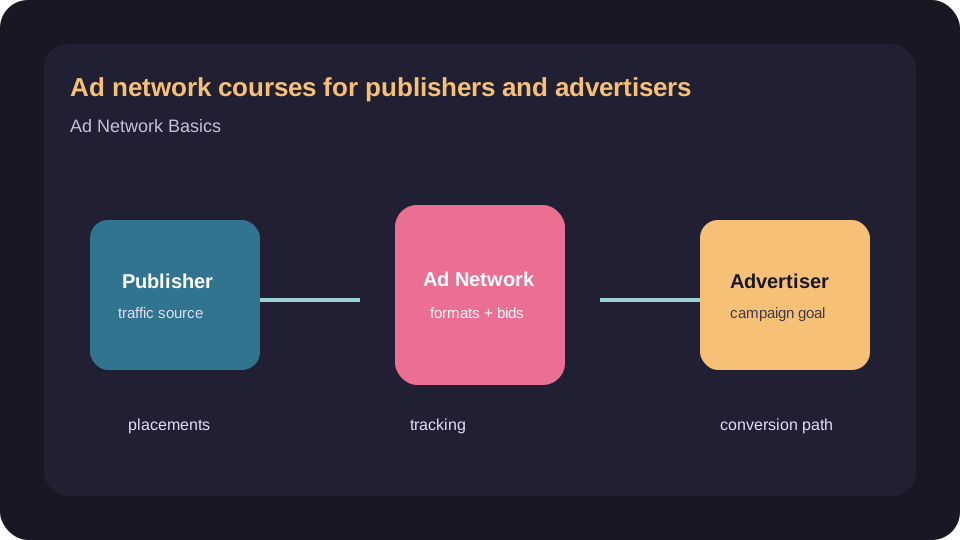
That is why the site combines written lessons with diagrams. The visuals show the relationship between publisher, ad network and advertiser, while the text explains how to evaluate each decision. Together, they make the site feel like a course library rather than a thin bridge to a tracker.
The first version focuses on durable evergreen topics: ad network basics, publisher monetization, advertiser testing, OctoClick review intent and format comparisons. After the site is indexed, the next expansion should follow actual query data. If Search Console shows impressions around native ad creatives, the site can add a native creative checklist, headline testing guide and landing page message-match course.
If publisher queries grow, the next pages should cover traffic segmentation, mobile placement testing, revenue reporting, payment troubleshooting and content categories. Those pages would support the publisher silo without drifting into unsupported earning claims. If advertiser queries grow, the expansion can cover tracker setup, campaign naming, postback basics, UTM discipline, budget pacing and campaign review templates.
Commercial expansion should be slower and more careful. More OctoClick pages can be added only when they answer a distinct query, such as advertiser setup, publisher onboarding, ad format selection or CPM/CPC testing. Repeating the same review under different titles would weaken the site. The better approach is to build one strong commercial hub and support it with specific educational pages.
A useful result is not only more clicks. A good satellite should attract visitors who understand why they are clicking. A publisher should arrive at the provider page with a clear monetization test in mind. An advertiser should arrive with a budget cap, tracking plan and landing page ready. A beginner should arrive with enough vocabulary to evaluate whether the platform fits their role.
That kind of traffic is more valuable than curiosity traffic. It is also safer for long-term SEO because the site offers real decision support. Pages can earn impressions for educational queries, comparison queries and brand-adjacent commercial queries, while the tracker link remains a natural next step rather than the only point of the content.
The goal for octoclick.courses is therefore a compact but serious course library: 41 indexable pages, clear silos, unique long-form content, visual diagrams, technical SEO basics and a cautious voice that fits the advertising niche. From there, expansion should be driven by search data and conversion behavior.
Measurement keeps the project honest.
FAQ
Before anything else, match ad network courses to your goal and confirm your tracking and targeting are set up. Then validate with a controlled test instead of relying on a single payout or volume claim.
No. For Ad network courses for publishers and advertisers, a beginner can confuse ad formats, pricing models and traffic quality signals before any budget is spent. A better decision includes user experience, traffic quality, reporting, compliance, budget control and recovery from poor tests.
Click through after you know how ad network courses affects your goal, format choice, tracking setup, budget limits and reporting expectations.
This page uses practical criteria for ad network courses rather than fake earnings screenshots or guaranteed results. It explains what to inspect before visiting the tracked provider page.
No. OctoClick Courses is an independent educational affiliate site. This Ad network courses for publishers and advertisers page may include commercial buttons that lead through a tracking link.
Browse
Every guide on OctoClick Courses, grouped by what you are trying to do — understand ad networks, buy traffic, monetize a site, or compare ad formats.