What is a video ad network?
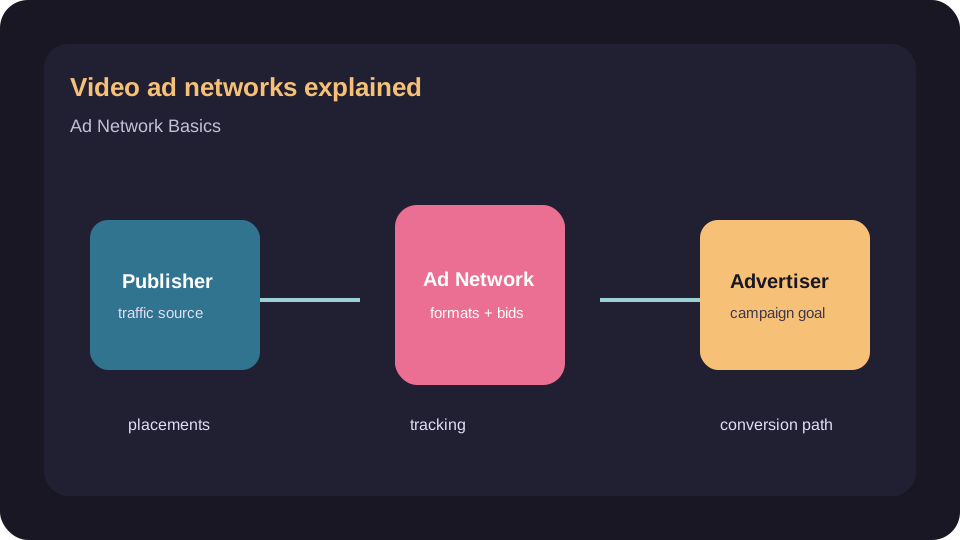
A video ad network connects advertisers who run video creatives with publishers who have a place to show them — inside their own videos or in a player embedded in articles. Video usually commands higher CPMs than banners because it holds attention longer, but it also needs more technical setup.
Instream vs outstream video
| Type | How it appears | Who can use it |
|---|---|---|
| Instream (pre-, mid-, post-roll) | Plays before, during or after the publisher's own video | Publishers with their own video content |
| Outstream | A player that opens inside an article or as a floating unit | Text-based sites without their own video |
| Rewarded / interstitial video | Full-screen ad in apps, often for a reward | Mobile apps and games |
Most content sites start with outstream, because it does not require producing video. Its CPM is usually lower than instream and it is more sensitive to user-experience complaints.
VAST, VPAID and how video ads are served
Video ads travel as VAST tags — an industry XML standard that tells the player which video file to load, which tracking pixels to fire and where the click goes. Older VPAID tags added interactivity but are being replaced by newer standards because of performance and security issues. When comparing networks, check which VAST versions and players they support.
Pricing models
- CPM — per thousand impressions; the most common model.
- CPCV — cost per completed view; the advertiser pays only when the video plays to the end.
- CPV — cost per view, with a minimum view time defined by the network.
Checklist for choosing a video ad network
- Does it support your setup: instream, outstream or app inventory?
- Does it accept your traffic GEOs and niche, and is there minimum traffic?
- How heavy is the player script, and how does it affect page speed?
- Does it support contextual targeting and brand-safety controls?
- What are the payment terms and threshold? See the publisher payment checklist.
When video is not the right format
If your traffic is mostly mobile, short-session or from tier-3 GEOs, video fill and CPM can be disappointing. In that case native, in-page push or popunder often earn more per visitor — compare in the ad formats comparison guide. OctoClick, for example, focuses on popunder, push and native rather than video.
Ready to compare options?
Open the tracked provider page after matching the offer to OctoClick review requirements.