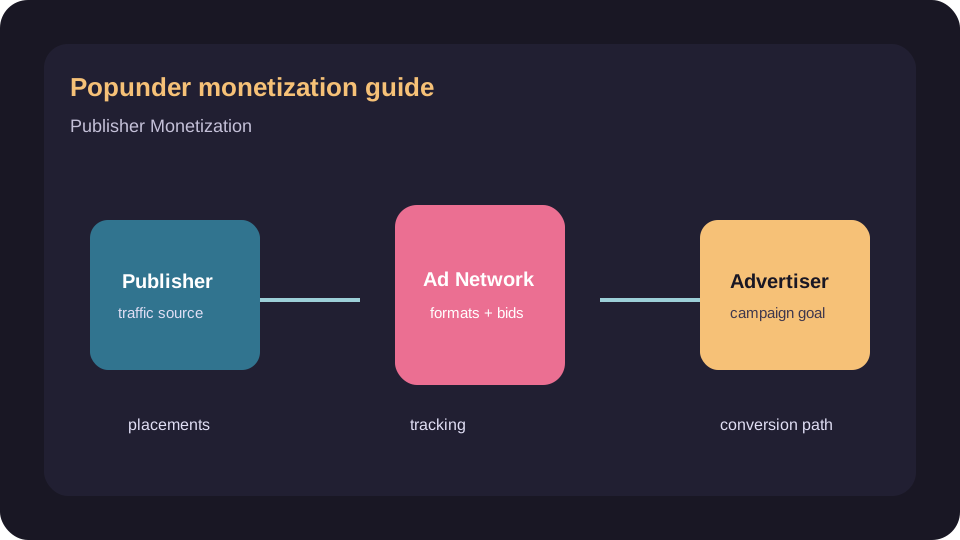
How publishers earn from popunders
Popunder monetisation pays a publisher when a full-page ad opens from a visitor session. Because the format does not occupy on-page space, it can run alongside existing display or native units and often fills inventory that mainstream programmes will not touch. For high-traffic sites in verticals that standard networks underpay, it can be a meaningful revenue line.
Frequency is the whole decision
The single lever that decides whether popunder revenue is sustainable is frequency. One popunder per visitor per session is a common, tolerable setting; several per session raises short-term earnings while quietly increasing bounce and driving away the returning readers who make a site valuable. Test conservative caps and watch return-visit numbers, not just the daily revenue figure.
| Setting | Effect on revenue | Effect on audience |
|---|---|---|
| 1 per session | Steady, sustainable | Minimal damage |
| Several per session | Higher short-term | Higher bounce, lost return visits |
Fit by site type
Popunder monetisation suits download portals, streaming, tools and high-volume international content, where visitors are transactional and less loyalty-sensitive. It suits brand-led editorial and community sites poorly, because the interruption undermines the trust those sites depend on. Match the format to how much your audience will forgive.
Combine, measure, and protect the brand
Run popunder alongside less intrusive formats rather than as the only source, review the advertisers appearing to avoid low-quality creatives, and judge the format on revenue per session against engagement. If returning visitors fall as popunder revenue rises, the trade is losing money you cannot see in the earnings report.
Ready to compare options?
Open the tracked provider page after matching the offer to popunder monetization requirements.