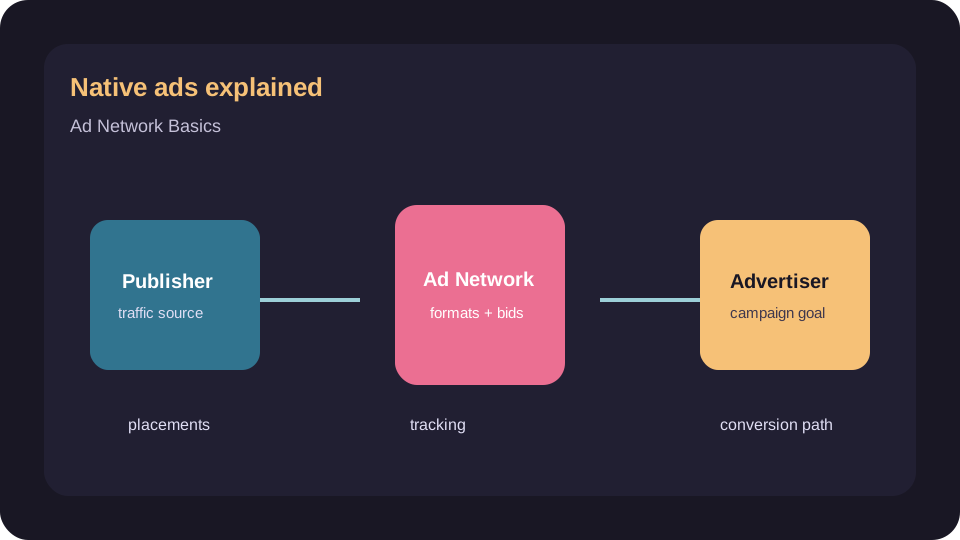
What native advertising actually is
Native ads are paid placements designed to match the look and feel of the content around them. Instead of interrupting, they appear as a recommended article, a promoted listing or an in-feed card. The user still sees a disclosure label, but the format reads as part of the page rather than a banner bolted onto it. That fit is why native tends to earn more considered clicks than pop or push.
How native differs from display and push
A display banner announces itself as an ad and competes for attention against the content. Push and popunder interrupt to borrow attention. Native does the opposite: it earns attention by belonging. The trade-off is intent versus volume. Native usually costs more per click and delivers less raw volume, but the clicks arrive from people who chose to engage with something that looked editorial.
Where native works and where it does not
Native suits offers that need a moment of consideration: content-led funnels, longer landing pages, subscriptions and products explained through a story. It works poorly for offers that depend on a hard interruption or an impulse action, where pop or push deliver cheaper results. Matching the format to the decision the user must make is the whole game.
| Signal | Native | Interruptive (pop/push) |
|---|---|---|
| User intent | Higher, self-selected | Lower, borrowed |
| Typical cost per click | Higher | Lower |
| Best offer type | Content, considered purchases | Simple landers, impulse actions |
What a beginner should test first
Start with a headline and image that would make sense as a real recommendation, not a hype claim, because native audiences reject obvious bait quickly. Send clicks to a landing page that continues the story the ad started. Judge results on cost per conversion and on-page engagement, since a native click that bounces immediately usually means the creative promised something the page did not deliver.
Ready to compare options?
Open the tracked provider page after matching the offer to native ads explained requirements.